
Prediction Markets in 2026: Best Sites and How They Really Function
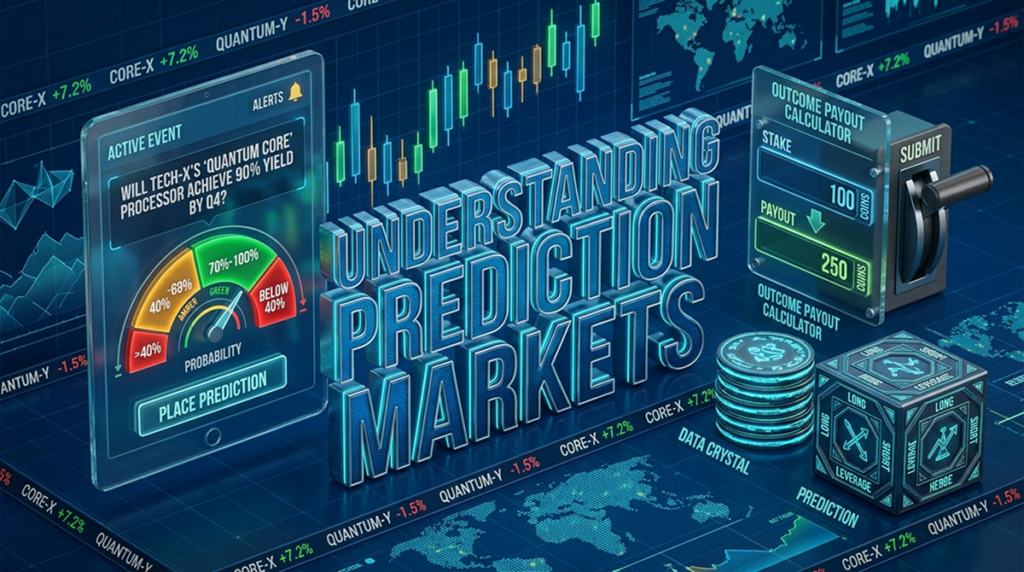
Prediction markets allow you to bet money on what will happen in the future — like sports scores, election winners, or changes in the economy. This guide explains how these markets work, which sites are currently the front-runners, and what distinguishes them from sportsbooks.
How the Prediction Exchange Model Really Works
A prediction exchange allows you to be more like a trader instead of just a bettor. You’re buying or selling contracts based on actual events — like sports outcomes, political contests, or changes in the market. Different from standard sportsbooks, there’s no house backing the other side of your bet.
How Event Contracts Work
Every contract is based on a yes or no — something either takes place or it doesn’t. Will a certain team take the win? Will inflation reach a specific figure? A “yes” answer gives you $1. A “no” answer gives you $0. It’s as clear as that.
The market price always hovers somewhere between $0 and $1. That price clearly shows what everyone thinks is likely to happen. If a contract is priced at $0.72, that means the market believes there’s a 72% chance of a “yes” outcome. At settlement, the price is fixed at either $0 or $1 — so you can see your potential gain or loss right from the start. Hundreds of contracts get opened weekly on various topics. Here’s an overview of the categories you can find, along with their coverage details.
| Category | What It Covers |
|---|---|
| Politics | Election results and changes in government leadership |
| Sports | Results and highlights from leagues and tournaments |
| Culture | Entertainment releases and pop culture happenings |
| Crypto | Shifts in prices for currencies like BTC and ETH |
| Climate | Information on the environment and weather goals |
| Economics | Data on stock index movements and economic indicators |
| Companies | Updates on company earnings and announcements |
| Health Statistics | Data related to public health, including disease and mortality statistics |
Structural Differences: Bookmakers vs. Prediction Markets
In a typical sportsbook, every wager is placed directly against the house. The house determines the odds, collects your cash when you lose, and hands out winnings when you hit the jackpot. Prediction markets operate using a totally distinct approach. Instead of betting with a bookmaker, folks trade contracts among themselves — a setup that resembles a financial exchange. These sites serve as marketplaces, connecting buyers and sellers based on each result. For that matchmaking role, they take a transaction fee.
Since there’s no central house offering liquidity, the involvement of active traders is really important. A market that has low trading activity usually shows bigger spreads and less favorable pricing. Greater liquidity leads to narrower price differences and quicker order fulfillment. Choosing a prediction market that sees daily trading is the wiser choice for anyone who’s serious about outcome contracts.
Trading Actions Available in Prediction Markets
In prediction markets, you can engage in three main trading actions. Each one acts as a financial approach. Below’s a look at what each action does and when you might want to use it.
- Getting a Yes Contract: This role benefits when a specific event takes place. If a basketball team has Yes contracts going for $0.54, a trader scooping them up at that price earns $1.00 per contract when the outcome is correct;
- Getting a No Contract: This position makes money when an event doesn’t happen. If a team’s Yes price is $0.49, then the No contract could be going for about $0.58. A trader who thinks that team will lose might buy the No contract at $0.58 and earn $1.00 for each contract if they’re right;
- Early Contract Exit: A trader holding a Yes contract at $0.40 who notices the price jump to $0.65 before the event ends can sell that contract right away. The gain stands at $0.25 for each contract, and there’s no risk linked to the final outcome.
How Prediction Markets Really Work
If you take a moment to check out a trade, things start to click into place. Five teams are still vying for the championship title. Each option comes with a “yes” price, and here’s how it plays out in terms.
- Choose your team — Team A is priced at $0.14, Team B also at $0.14, Team C at $0.12, Team D at $0.09, and Team E at $0.09. You decide on Team D for $0.09 per contract;
- Decide your amount — You opt to enter $100. Make sure the price reads $0.09, then enter 100 in the amount box;
- Review the trade summary — At $0.09 per contract, your $100 gives you 1,111 contracts. If Team D wins, every contract pays out $1.00, so you’d get back a total of $1,111;
- Submit the trade — Click confirm to secure the position at the current price;
- Manage the position — You can keep it until the result comes in. Or, if Team D’s chances improve during the tournament, cash in the contracts early and enjoy the profit before the outcome is announced.
Practical Applications of Prediction Markets
Prediction markets aren’t just about sports. They relate to politics, crypto, and a bunch of other areas. The same contract reasoning applies to each one — it’s simply different events leading to different results.
Consider a political scenario. A market may wonder if a sitting president will okay a certain bill by Friday. “Yes” shares are priced at $0.26, while “No” shares are at $0.74. If you wager $50 on “Yes,” you’ll end up with 192 shares at $0.26 each. If the bill goes through, you’ll get your $192 automatically. By the way, crypto markets operate in a similar manner. A contract could question whether Bitcoin will reach $120,000 before Q3 2026 wraps up. If you believe it won’t, you purchase “No” shares. Those shares only yield returns when the price remains under the limit. The approach in this case is unique — instead of wagering on growth, you’re placing your bets on a limit.
Both situations follow the same contract format. What really shifts is the way you interpret the odds and which outcome you choose to support. Shares priced low suggest that people are skeptical about it. When shares are expensive, many folks believe that’s how it works.
How Sportsbook Odds and Prediction Market Prices Show Probability
You can look at two distinct tools that reveal the same likelihood — but they do it in different manners. Sportsbook odds and prediction market prices are based on the same math, but they showcase it in their own ways.
For instance, consider a sportsbook line: if you place a £100 bet, it pays out a total of £600, which means you’d make a profit of £500. That ratio works out to about a 16.7% chance of that happening. The math is simple—just split the stake by the total return.
A prediction market actually functions a bit differently at first glance. A “Yes” share priced at £0.17 will set you back £17 to get a £100 payout. That price of £0.17 translates to a 17% chance. No need for extra math — the price is the likelihood.
Both approaches suggest almost the same figure. A 16.7% implied likelihood from sportsbook odds sits right beside a 17% rate on a prediction market. The difference is slight, typically just the buffer each operator creates. Take that away, and the probability estimate remains pretty much the same in both formats.
Bookmaker Vig’s Tipping Point vs. Prediction Market Transaction Fees
Bookmakers typically include their earnings right within the odds. The arrangement asks a bettor to stake £110 in order to make a profit of £100 — that built-in fee is known as vigorish, and it hovers around 4.76% on each bet. Sports prediction markets operate in a way. There’s no bookmaker taking part here. You’re betting against other users, not the house. These markets operate more like a financial exchange. Revenue is generated from a transaction fee applied to each trade, which typically ranges from 0.5% to 2%. That’s more than a 50% drop in costs compared to sportsbook margins. The way the business operates is fundamentally different — bookmakers make money when players lose, whereas prediction markets benefit from the amount traded, no matter who comes out on top or who doesn’t.
Different Kinds of Prediction Sites: A Simple Breakdown
Not every prediction site operates in the same manner. There are clear types that shape how these sites operate, the currency they use, and who’s in charge of them. Here’s what makes them different.
- Actual cash vs. Play money: a few sites allow you to bet real CAD, while others operate on pretend funds with no financial risk involved;
- Centralized vs. decentralized: a site might be managed by a single company that has complete control, or it could function as a decentralized network without a sole authority in charge;
- Crypto vs. fiat: the money that’s out there includes digital currencies like Bitcoin or Ethereum, and also government-backed cash like the Canadian dollar.
Top Prediction Market Sites for 2026
Eight key sites currently shape the way prediction markets operate in the US. Below is a look at each one — what they are, how they function, and what makes them unique compared to the others.
| Service | Model | Details and Status |
|---|---|---|
| Kalshi | CFTC-Regulated | Holds federal approval for election contracts plus markets in tech, finance, culture, and sports |
| Polymarket | Decentralized | Built on Polygon blockchain, flagged by financial regulators, primarily used outside the US |
| DraftKings Predictions | Major Operator | Entered prediction markets through a acquisition, now live across multiple US states |
| FanDuel Predicts | Major Operator | Focuses on sports outcomes in approved states, with a selection of commodity contracts |
| Fanatics Markets | Major Operator | Grew through market buyouts and holds partnerships with crypto trading firms |
| Robinhood | Trading App | Provides contracts on political races and sports events through its trading interface |
| Crypto.com | Crypto Exchange | Lists markets across politics, sport, finance, economics, and pop culture topics |
| PredictIt | Political Markets | Covers only political events — no sports, no commodity contracts, no general outcome markets |
Popular Market Topics
Forecasting sites touch on a variety of topics — from weather changes to who might take charge of a nation next. Still, most of the action lands in 5 main market types. Take a look at how each one appears.
- Future Political Outcomes: These contracts deal with elections, approval ratings, and what happens in the legislature. You can express your thoughts on whether a bill gets approved, if someone is let go from their position, or how the seats are divided in a parliament. These markets usually surpass expectations when it comes to accuracy. That’s because cash is at stake. Prices change quickly with breaking news, causing the market to show political feelings;
- Sports Prediction Exchanges: They operate like sportsbooks — betting on game winners, point spreads, and totals. You can also guess the teams that will win championships, who might receive awards, or which squad is likely to move on. It’s a choice: go for “Yes” or “No.” Contracts end up at either $1 or $0. On regulated platforms, regulators see these futures contracts as financial tools;
- Finance and Economic Data Contracts: These contracts draw from economic signals and market changes. Consider inflation numbers, central bank interest rate predictions, and costs of goods. You can guess if a stock index surpasses a certain level or how many items a manufacturer sends out in a quarter. Traders tap into these markets to balance financial risk — and they don’t require any derivatives;
- Speculative Crypto Contracts: The majority of crypto contracts are centered around whether a certain coin reaches a target price during a set timeframe. Other agreements deal with ETF approvals, updates to blockchain protocols, and the launch of new technologies. These tools assist holders in lessening their risk from price fluctuations and preparing for changes in the sector;
- Expert Prediction Networks: These networks draw insights from individuals who have a history of making predictions. Members share their thoughts on changes in politics, market products, and scientific breakthroughs. When these groups set confidence levels for their predictions, the results often match up with what happens in the world. Organizations use this information to guide their strategy or create policies.
How Prediction Markets Differ From Sportsbooks
When you place a prediction market side by side with a typical sportsbook, you’ll notice some structural differences. The two models operate in just about every aspect differently — whether it’s their pricing, regulation, or the competitors you’re truly facing. Here’s a comparison of the two models. The table below lists 15 different categories, allowing you to easily spot the differences before making your choice.
| Feature | Prediction Markets | Licensed Sportsbooks |
|---|---|---|
| Regulation | Managed by financial regulatory bodies | Supervised by gaming authorities |
| Availability | Generally available but may face local restrictions | Only allowed in specific states |
| Consistency | Conditions remain unchanged no matter your location | Options vary based on local regulations |
| Core Concept | You trade contracts that settle at either extreme value | You select outcomes at odds defined by the provider |
| Who You Bet Against | Traders in a shared market | The house — the provider takes the opposite side |
| Fees | A fee per trade typically between 0.5% and 2% | The provider’s profit is included in the odds, usually 5% or more |
| Price Transparency | Prices show probability set by market dynamics | Probability isn’t clear from odds and needs figuring out |
| Early Exit | You can sell your contract anytime for cash-out | A cash-out option is there, but it’s regulated by the operator |
| Liquidity | Can differ by event — certain markets might feel sparse | Typically high, since the provider manages all transactions |
| Position Limits | Limits are usually on the lower side outside major markets | Higher limits are available for big events |
| Event Coverage | Covers a range of topics including sports, politics, and economics | Mainly centered on sports, with few novelty options |
| Live Betting | Often not offered or restricted | Commonly available with lots of in-play options |
| Parlays and Props | No parlay options, and prop bets are rare | Plenty of prop bets, plus tools for parlay creation |
| Ease of Use | Needs a basic understanding of trading contracts | Easy to navigate for newcomers |
| Best Suited For | Those into analysis, trading, or risk management | Players who enjoy props and live betting |
What Works and What Doesn’t
Every forecasting tool comes with its own advantages and drawbacks. A view of both sides aids in making better decisions — no fluff, no partiality.
Core Benefits of Prediction Markets
Prediction markets are quite different from betting choices in a few ways. Here are the main reasons why traders in 2026 choose them for predicting events and managing their positions.
- Real money sharpens forecasts — When real cash is involved, people tend to dig deep into their research. This brings group forecasts much nearer to the truth than what polls or expert opinions could ever manage;
- Prices refresh instantly — Each new trade alters the odds right away. There’s no waiting around or tweaking things by hand — the market shows what people really feel as soon as a trade is made;
- Getting it right matters more than just being liked — Thanks to the crowd wisdom effect, unique but accurate perspectives hold significance. Someone who has a deeper understanding tends to earn more, no matter the opinions of the crowd;
- Contract prices reflect odds — When a contract is priced at £0.73, it indicates that the market believes there’s a 73% likelihood of that outcome occurring. No translation needed — the numbers say it all;
- Get out before the result is known — You can close positions while the market is still active. If things change, traders secure their gains or limit their losses without waiting for the outcome; Fees are lower than what you’d find with bookmakers — While bookmakers usually take 10–15% cuts, prediction markets generally charge just 2–5%, which means more money stays with the trader;
- Topics cover a wide variety — From national elections and currency shifts to company profits and regulatory decisions, traders aren’t just confined to sports.
What Are the Possible Risks to Be Aware Of?
There are worries linked to this kind of market. Some are easy to spot, while others might not be as clear. Here’s a look at the categories to consider before you put any cash on the line.
- Regulatory risks: The laws surrounding prediction contracts change often — as of 2026, the UK and several EU countries still see some types of contracts as unregulated, leaving traders with limited legal protection;
- Market structure risks: Quiet markets can be influenced by just one trader who has plenty of money — a single bet can dramatically shift the odds and disadvantage smaller players;
- Liquidity risks: Some niche or lesser-known sport markets might have pools worth less than £10,000 in total, making it tricky to get out of a position quickly or trade amounts larger than a few hundred pounds;
- Ethical risks: Making money from events tied to wars, natural disasters, or deaths brings up moral dilemmas — certain markets have faced backlash and were forced to shut down because of this;
- Practical risks: The range of sports available is limited compared to bookmakers — there are no same-game multiples, no accumulator bets, and no prop markets like first goalscorer or player points.
Legal Framework and Supervision
Operating prediction markets finds itself at the intersection of two regulatory authorities — national financial regulators and local gambling boards. The legal standing changes based on your location, which really complicates keeping everything in line.
How Prediction Markets Are Viewed Legally
Prediction markets belong to a legal category — event-driven contracts. This places them within the boundaries of national financial derivatives legislation, rather than gambling legislation. Financial regulators take care of oversight, while gaming commissions don’t. That difference is actually pretty significant. The origins of this classification trace back to older contracts for commodities and stock prices, where bets based on events were already seen as financial tools. That example has influenced how today’s regulators handle matters such as sports contracts and the results of political elections. Today, those contracts are completely allowed — but only with approval from the country’s financial authority, not any gaming organization.
How Governments Regulate and Grant Special Approvals
Prediction markets are treated similarly to financial derivatives in the eyes of the law. Federal agencies that oversee futures contracts pay attention to them. They don’t get treated like gambling products. Traders here compete among themselves — not against the house.
Derivative rules usually require that a contract either covers an actual financial risk or aids in setting prices. When a contract doesn’t fit within those limits, an operator can put forward a formal request for an exemption. Regulators will only approve such requests when four specific conditions are satisfied:
- Social or economic value — the contract needs to offer a measurable advantage to the markets or the public;
- Verifiable outcomes — the results should be easy to confirm without any confusion;
- Manipulation resistance — there must be structural safeguards in place to prevent any influence;
- Market stability — approval will be refused if the contract poses risks to the financial systems.
Federal vs. State Authority Over Prediction Markets
Prediction market platforms claim that national financial regulations ought to be more important than state gambling laws. Not everyone sees it that way. A number of local authorities have reacted strongly. Some states, along with a handful of counties, have put out official cease-and-desist orders, calling certain contracts illegal sports betting according to local laws. The battle in the courts over who really has the final say is still ongoing in various courtrooms. Federal regulators claim that commodity trading law is their territory. State attorneys general argue that no federal regulation takes away their ability to uphold local gambling laws. No definite winner has shown up so far.
What Lies Ahead for Prediction Markets
Changes in rules coming in 2026 are a factor here. Courts across the U.S. and the EU continues to make decisions about what’s acceptable, and those decisions have a direct impact on how these markets develop. Capital is shifting quickly — and it’s coming together. Smaller players are being squeezed out, as just a few platforms take in the bulk of the trading activity.
Important Market Trends Every Trader Needs to Watch
In 2026, seven factors influence market movements. Understanding what to monitor can really impact whether you end up in a money-making spot or facing losses. Here’s what you should really keep an eye on right now.
- Regulatory announcements and rulings — legal decisions clarify which areas permit trading, directly affecting where money flows and which players gain or lose access;
- Compliance with regional restrictions — how a service navigates local regulations reveals a lot about its trustworthiness and chances of sticking around in a certain area;
- New product rollouts — introductions like proposition bets and parlay structures provide avenues for traders looking to mix things up;
- Liquidity movement — monitoring shifts in volume across various services and specific events shows where the cash is flowing at any given time;
- Media coverage of price forecasts — when news outlets spotlight certain odds or predictions, public opinion can change rapidly, creating both risks and chances;
- Electoral cycles — voting times often spark increased activity and focus in the markets, turning them into windows for action;
- Crypto law changes — changes in asset rules impact how decentralized services operate and whether they stay open for traders.
Have Questions About Market Forecasting? We’ve Got Answers
Just getting started with prediction markets? You’re definitely not on your own. Most newcomers tend to have a similar bunch of questions. Here are the most typical questions we receive, answered clearly and with no nonsense.
Do Prediction Markets Function Like Gambling?
Legally speaking, these two concepts aren’t identical. In prediction markets, you buy and sell futures contracts with other participants — there’s no house to compete against. Due to that setup, it’s financial regulators who take care of oversight instead of gambling commissions. That being said, there’s definitely some overlap in what they do. Both allow you to place bets on upcoming events, and each can lead to either a profit or a loss.
Can I Legally Access Prediction Markets?
For many folks, absolutely. These markets usually fall under the laws of financial derivatives instead of gambling regulations. That legal status is what allows them to operate in areas where sports betting sites encounter limitations. Still, your country or state might have different rules — so it’s a good idea to look into local regulations before you sign up.
Do Prediction Markets Really Offer Better Payouts Than Sportsbooks?
Generally speaking, they do. Prediction markets typically take a fee that ranges from 0.5% to 2% for each transaction. That’s definitely a noticeable edge. A sportsbook has about a 5% margin built in. Say you wager $100 on something — a sportsbook will generally take about $5 off for their margin, but a prediction market could only charge you around $1. That difference really piles up as time goes on.
Still, you might find that some sportsbooks provide better odds for certain results, so it’s a good idea to compare directly before you put down your £50 or £100.
How Safe Are Crypto Prediction Markets, Really?
Crypto prediction markets come with financial risks. Token prices can fluctuate by 30–50% in just one day, and this can directly influence how much your position is worth. Smart contracts keep user funds on-chain, but if there’s a flaw in the code, it could result in total loss — audits are useful, but they’re not foolproof. Regulatory status in 2026 is still a bit murky in many areas, which means platforms might be taken offline with hardly any notice. Low liquidity in smaller markets makes it tough to sell positions at prices. Only invest what you can actually afford to lose.
How Do Sports Prediction Markets Differ from Traditional Bookmakers?
These two operate on different systems. Prediction markets are considered a type of financial derivative — you trade shares based on outcomes with others. A bookmaker stands apart. You’re betting directly against the odds set by the house.
How Do Sports Prediction Markets Differ from Traditional Bookmakers?
These two operate on distinctly different systems. Prediction markets are considered a type of financial derivative — you trade shares based on outcomes with others. A bookmaker stands apart. You’re betting directly against the odds set by the house.
How Can You Begin Without Making Major Risks?
Just starting with binary options trading in 2026? These steps guide you through the entire process—from choosing the platform to taking your first steps with real money.
- Select a licensed trading site that follows official financial guidelines.
- Create an account and confirm your identity before adding any funds.
- Start with a deposit—around $10–$20—to minimize early risk.
- Make 2–3 low-value trades on short-term contracts to get a feel for how pricing and payouts work.
- Keep track of your results after each trade and reflect on what worked well or didn’t.
- Only move on to larger contract sizes after you’ve completed at least 10 trades.
- Steer clear of complicated multi-variable contracts until you’re entirely at ease with the basic ones.